Need sewer line repair in Garrettsville?
Have a leak, a backed-up drain or a sewer problem? Send a quick request and Othersburn Plumbing will point you to independent local providers.
No obligationEmergency plumbing and sewer help in Garrettsville
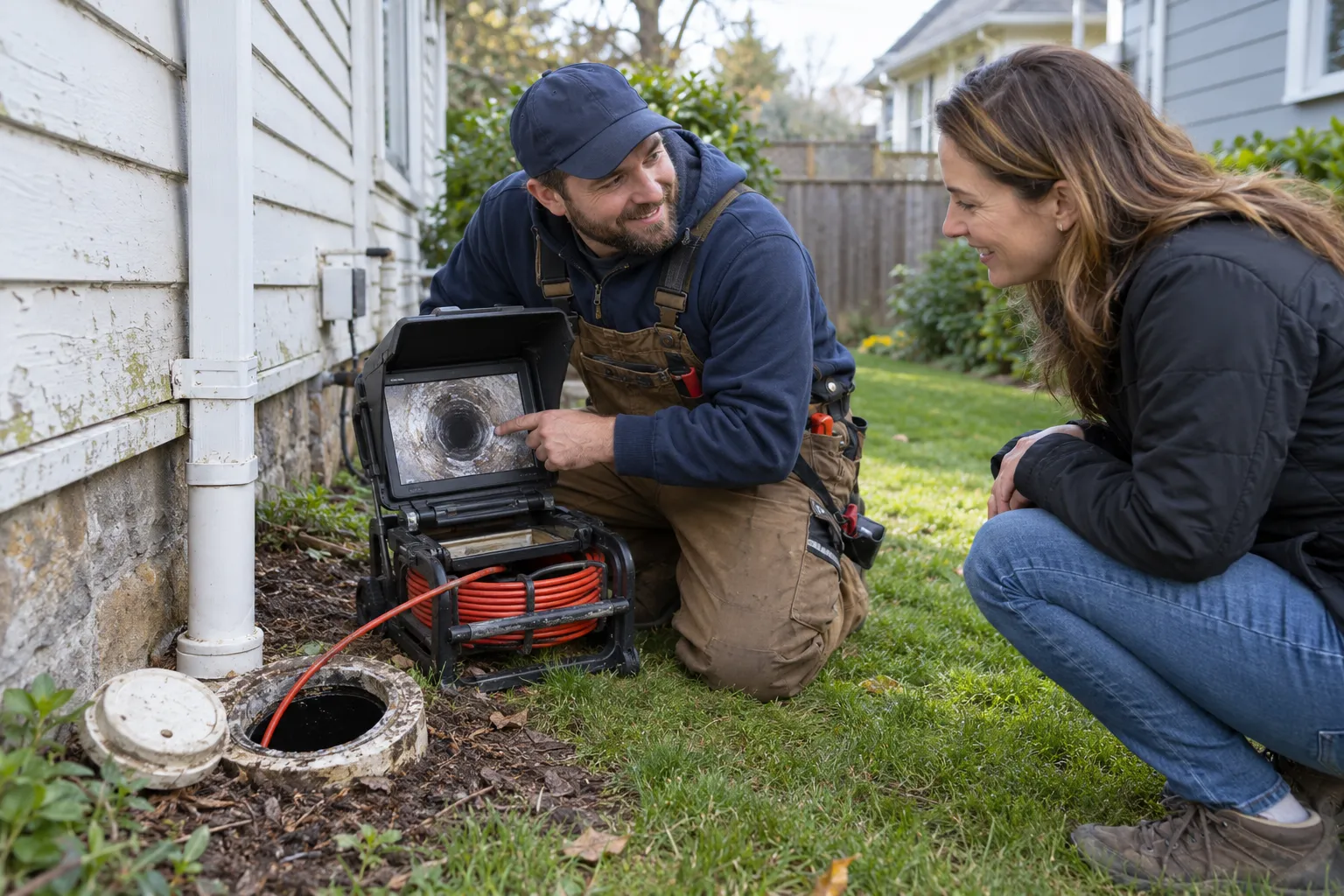
A sewer line carries every drop of waste water out of your house. When it cracks, sags or clogs, the trouble shows up fast: slow drains, gurgling, bad smells, or sewage in the bottom floor of the home. In Garrettsville and the Garrettsville area, many houses have pipes that are decades old, and they have lived through deep frost, spring flooding and shifting soil.
Othersburn Plumbing is a referral service. We do not do the work. We connect homeowners with independent local providers in our network who handle sewer line repair, from camera inspections to spot fixes and full replacement. This page explains the warning signs, the repair options, what the work may cost and what to ask before you hire.
Sewage in a floor drain, tub or toilet is a sign the main line may be blocked or broken. Take a breath. A few careful steps protect your family while you line up help.
Sewage carries germs, so treat every wet surface as unclean.
Request a callback to check provider availability in your area.
Most sewer lines complain before they fail. Older homes often give clues for months.
One slow sink is usually a local clog. When the tub, toilet and basement drain all slow down together, the main line is the likely culprit.
Gurgling after a flush, a sewer smell in the yard, or a patch of lawn that stays wet and extra green can point to a leak underground.
New foundation cracks, a sinking patio or a dip in the yard may mean soil is washing away around a broken pipe.
Many frame houses and bungalows built decades ago have clay, cast iron or fiber pipe. These materials age. Joints loosen, and walls rust or crumble.
Tree roots slip into tiny gaps and grow into thick plugs. Deep winter frost can push and pull the ground, and spring flooding can soften soil until pipes shift. Hot, humid summers keep roots growing hard.
Older houses often hide old repairs. A mismatched fitting or a shallow slope from a long-ago fix can catch paper and grease for years before anyone notices.
A good provider looks before cutting. A small camera on a flexible cable is sent through the cleanout, showing cracks, roots, breaks and low spots on screen.
Some providers can also locate the pipe from above and mark its depth. Ask to see the footage. It shows you what they see.
The right fix depends on the damage, the pipe and your yard.
Emergency drain clearing can open a root or grease plug so water moves again. It is a short-term fix if the pipe itself is damaged.
If only one section is broken, a provider may dig down and replace just that piece.
A resin-coated sleeve is pulled into the old pipe and hardened, forming a new pipe inside the old one. It means less digging, which helps with lawns and driveways.
When a pipe has collapsed or sags badly, replacement may be the sound choice. Some use trenches, others pull a new pipe through as the old one breaks apart.
Sewer work often needs a permit, and rules differ by town. Your line may also run under a sidewalk or street, where the city owns part of it. Ask the provider who handles permits and utility locating, and where your responsibility ends.
If your home has a full basement, ask about a backwater valve, which helps keep sewage from flowing back in during heavy storms. Hail and thunderstorms can overload local sewers, so it is worth asking about.
A calm set of questions tells you a lot. Know the red flags.
Clear, patient and specific. A good provider names the problem, offers more than one option and explains the tradeoffs.
Some policies may cover sudden damage, but many exclude wear and tear or root damage. Check your policy. Providers can often help document damage with photos and camera footage for a claim.
A small camera travels the pipe so you can see cracks, roots and low spots before work begins.
Providers can clear roots, grease and blockages with emergency drain clearing and blocked pipe services.
Damaged sections can be replaced, or the whole sewer line, depending on its condition.
A trenchless liner can renew an aging pipe with far less digging across your yard.
Prices vary a lot by pipe depth, length, soil, access and local rules. These are typical U.S. ranges only. Ask every provider for a written quote that lists the method and what is included.
| Service | Typical range | Notes |
|---|---|---|
| Camera inspection | $100 – $500 | Often worth doing before any repair |
| Root or blockage clearing | $150 – $600 | Short-term if the pipe is damaged |
| Cleanout installation | $500 – $2,500 | Makes future access much easier |
| Spot repair of one section | $1,000 – $4,000 | Depends on depth and digging |
| Trenchless pipe lining | $4,000 – $12,000 | Less yard damage; needs a usable pipe |
| Full sewer line replacement | $3,000 – $25,000 | Length, depth and surface repair drive cost |
Stop using water, keep people away from sewage and note what you see, such as backups or smells.
Request a callback or send the request form so a local provider can respond.
The provider looks inside the pipe and explains your options in writing.
After the work, check what was done, keep your paperwork and ask about care.
Aging pipes and past patch jobs need patient, careful providers, and we focus on that.
You connect with local, independent providers in our network who do the actual work.
We share what to ask and which red flags to watch for, so you decide calmly.
Request a callback to check provider availability, or request an estimate online.
Have a leak, a backed-up drain or a sewer problem? Send a quick request and Othersburn Plumbing will point you to independent local providers.
No obligationCommon signs include several slow drains at once, gurgling, sewer smells, wet spots in the yard and backups in a basement or ground-floor drain. A camera inspection from a local provider can confirm whether the main line is damaged.
Some policies may cover sudden damage, but many exclude wear, age and roots. Check your policy or ask your insurer. Providers can often help document the damage with photos and camera footage for a claim.
Sometimes. Trenchless methods like pipe lining need much less digging, but they only work if the pipe is still in fair shape. A camera inspection helps a provider tell which option fits.
Have a leak, a backed-up drain or a sewer problem? Send a quick request and Othersburn Plumbing will point you to independent local providers.
No obligation